
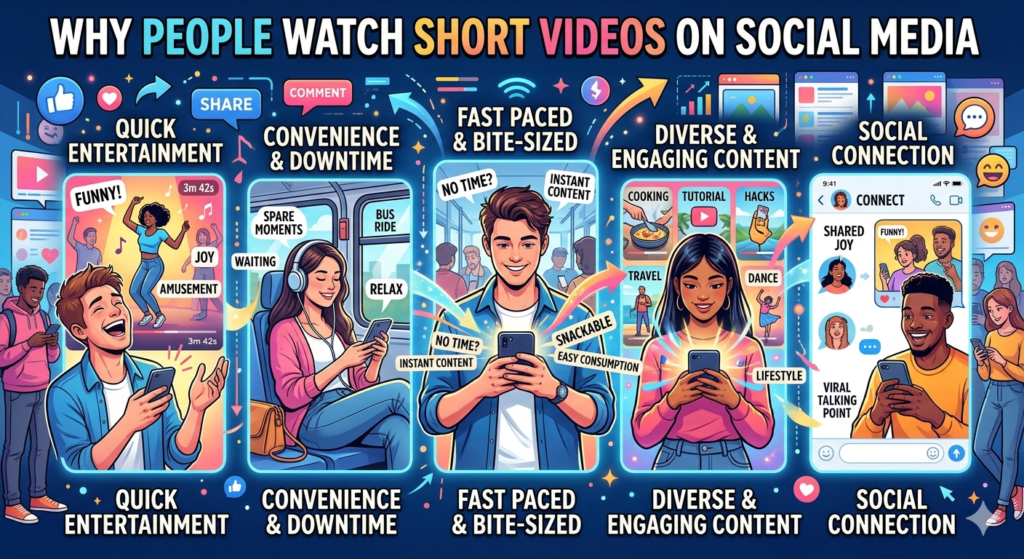
Why People Watch Short Videos on Social Media
Social media has transformed the way people consume entertainment, information, and communication. In recent years, one format has dominated nearly every major platform: short-form video. Whether it is scrolling through TikTok clips, Instagram Reels, YouTube Shorts, or Facebook videos, millions of people spend hours every day consuming bite-sized content.
The rise of short videos is not accidental. The combination of psychology, technology, algorithms, and modern lifestyles has created the perfect environment for short-form content to thrive. Today, people increasingly prefer quick, engaging, and visually stimulating content over long articles, lengthy television shows, or even traditional YouTube videos.
This article explores why people watch short videos, the psychology behind the behavior, the role of algorithms, the effects on attention span, and how the short video trend has become one of the biggest forms of digital entertainment worldwide.
The Rise of the Short Video Trend
The short video trend exploded globally with the rise of platforms like TikTok. Although short videos existed before, TikTok refined the formula by combining powerful recommendation algorithms with endless scrolling and highly engaging content.
Soon after TikTok’s success, other major social media platforms introduced their own versions:
- Instagram Reels
- YouTube Shorts
- Facebook Reels
- Snapchat Spotlight
Short-form video became the dominant content format because it matched modern user behavior. People wanted fast entertainment that fit into busy schedules and shrinking focus windows.
Unlike traditional media, short videos provide instant gratification. Users can consume dozens of clips in just a few minutes, creating a constant stream of novelty and stimulation.
The format also lowered the barrier for creators. Anyone with a smartphone could produce viral content. This led to an explosion of relatable, authentic, and personalized videos that traditional media could not compete with.
Why People Watch Short Videos
There are several psychological and technological reasons behind the popularity of short-form content. Understanding these reasons helps explain why billions of users continue watching short videos every day.
1. Instant Entertainment
One of the biggest reasons people watch short videos is convenience. A short video provides entertainment almost instantly.
Unlike movies or long-form content that require commitment, short videos demand very little time or attention. Users can watch one clip during:
- Work breaks
- Commuting
- Waiting in line
- Studying
- Before sleeping
This ease of access makes short videos highly appealing in modern life.
People often seek quick bursts of entertainment to escape boredom, stress, or routine tasks. Short videos perfectly satisfy this need.
2. Endless Variety
Another major factor is variety.
On short video platforms, users can watch:
- Comedy
- Tutorials
- Gaming
- Food reviews
- Fitness clips
- Fashion advice
- Technology news
- Educational content
- Memes
- Music performances
The endless stream of different topics keeps users curious and engaged.
Traditional television follows scheduled programming, but social media algorithms constantly personalize content for each user. This creates a highly addictive experience because every swipe could reveal something new and exciting.
3. Dopamine and Reward Cycles
Psychology plays a major role in the popularity of short-form videos.
Every time users encounter entertaining or emotionally stimulating content, the brain releases dopamine, a neurotransmitter associated with pleasure and reward.
Short videos create rapid reward cycles because users receive:
- Immediate humor
- Emotional reactions
- Surprises
- Interesting facts
- Visual stimulation
The unpredictability of what comes next strengthens engagement. Users continue scrolling because the next video might be even better than the previous one.
This mechanism is similar to slot machines and variable reward systems used in gaming. The uncertainty keeps people hooked.
4. Personalized Algorithms
Algorithms are central to the success of short video platforms.
Modern recommendation systems analyze:
- Watch time
- Likes
- Comments
- Shares
- Replays
- Search history
- Viewing patterns
The platform quickly learns what users enjoy and delivers increasingly relevant content.
This personalization creates a feedback loop where users feel like the app “understands” them. As recommendations improve, users spend even more time watching videos.
The result is a highly tailored entertainment experience unlike traditional media.
5. Social Connection
Humans are social by nature. Short videos help people feel connected to trends, communities, and online culture.
Users watch videos to:
- Participate in viral trends
- Share memes with friends
- Follow influencers
- Stay updated on internet culture
- Relate to others with similar interests
Many users fear missing out on popular trends or discussions. Watching short videos helps them stay socially relevant and connected.
The Relationship Between Short Videos and Attention Span
One of the most discussed topics surrounding short-form content is its impact on attention span.
Modern digital environments constantly compete for user attention. Notifications, advertisements, and endless content streams condition people to seek rapid stimulation.
Short videos reinforce this behavior by delivering fast-paced information in condensed formats.
How Short Videos Affect Attention
Short-form content encourages rapid switching between stimuli. Users often scroll through dozens or even hundreds of clips in a single session.
This may influence the brain’s ability to focus on slower-paced activities such as:
- Reading books
- Studying
- Watching long lectures
- Deep work
- Long conversations
Some researchers and educators argue that excessive consumption of short-form content can reduce patience for activities requiring sustained concentration.
Fast Content Consumption Habits
People are increasingly accustomed to receiving information quickly.
Instead of watching a 20-minute tutorial, users may prefer:
- A 30-second summary
- A one-minute hack
- A quick visual explanation
This shift affects how people consume news, education, and entertainment.
However, short videos are not entirely negative. They can also:
- Simplify learning
- Improve accessibility
- Deliver useful information quickly
- Help users discover new topics
The impact depends largely on how users balance short-form and long-form content.
TikTok Reels Addiction and Social Media Behavior
The phrase TikTok Reels addiction has become increasingly common because many users struggle to stop scrolling.
Platforms are intentionally designed to maximize engagement.
Infinite Scrolling Design
One reason short videos are addictive is the infinite feed structure.
Unlike television episodes or traditional videos that naturally end, social media feeds never stop. Users continuously swipe upward for more content.
This removes natural stopping points and encourages prolonged viewing sessions.
Autoplay Features
Autoplay is another powerful engagement tool.
Videos start instantly without requiring users to click anything. This reduces friction and increases passive consumption.
Even users who intend to watch “just one video” often continue scrolling for much longer than planned.
Emotional Stimulation
Short videos frequently trigger strong emotional reactions:
- Laughter
- Shock
- Excitement
- Anger
- Inspiration
- Curiosity
Emotionally charged content is more memorable and shareable. Platforms prioritize such content because it drives engagement.
This emotional stimulation contributes to habitual usage patterns.
Habit Formation
Watching short videos often becomes an automatic habit.
People may open apps reflexively when they:
- Feel bored
- Want a distraction
- Experience stress
- Avoid difficult tasks
Over time, these repeated behaviors become deeply ingrained routines.
Social Media Usage in the Modern World
Modern social media usage patterns reflect major changes in communication and entertainment.
People now spend several hours daily on social media platforms. Short-form videos dominate much of this screen time.
Mobile-First Consumption
Smartphones are a major reason behind the growth of short videos.
Short-form content is designed specifically for mobile viewing:
- Vertical format
- Quick loading
- Touch-based navigation
- Full-screen immersion
Users can consume content anywhere at any time.
Short Videos as a Replacement for Traditional Media
Many younger audiences now prefer short-form social media content over traditional entertainment sources such as:
- Television
- Cable networks
- Newspapers
- Long-form blogs
Short videos offer more interactivity, personalization, and constant novelty.
This shift has forced traditional media companies to adapt their strategies.
Multi-Tasking and Modern Lifestyles
Modern lifestyles are fast-paced and highly fragmented.
Many people struggle to dedicate long periods to entertainment. Short videos fit easily into fragmented schedules.
Users can consume content during brief moments throughout the day without major time commitment.
Digital Entertainment and the Evolution of Content
Short videos represent a major evolution in digital entertainment.
Entertainment is becoming:
- Faster
- More personalized
- More interactive
- More accessible
Short-form platforms combine entertainment with social interaction, creating highly immersive experiences.
Why Short Videos Feel More Engaging
Several design factors make short videos highly engaging compared to other media formats.
Visual Stimulation
Short videos rely heavily on visual elements:
- Bright colors
- Quick editing
- Captions
- Effects
- Music
- Facial expressions
These features capture attention quickly.
Fast Pacing
Most short videos move rapidly from one point to another.
Fast pacing prevents boredom and maintains engagement. Many creators intentionally edit videos to maximize retention.
Relatable Content
Unlike polished traditional media, many short videos feel authentic and relatable.
Users often prefer creators who appear genuine and approachable rather than overly professional.
This authenticity strengthens emotional connection and trust.
Educational Short Videos
Short-form content is not limited to entertainment.
Educational creators now use short videos to explain:
- Science concepts
- Programming
- Fitness tips
- Language learning
- Financial advice
- History
- Productivity strategies
This format allows users to learn quickly and efficiently.
However, educational short videos also have limitations. Complex subjects often require deeper exploration beyond quick summaries.
The Role of Creators in the Short Video Ecosystem
Content creators play a crucial role in maintaining user engagement.
Creators constantly experiment with:
- Hooks
- Trends
- Editing styles
- Storytelling techniques
The first few seconds are especially important because users decide almost instantly whether to continue watching.
The Psychology of Scrolling
Scrolling behavior is deeply connected to human psychology.
Curiosity
Humans naturally seek novelty. Each swipe promises a new experience.
This constant anticipation drives continued engagement.
Fear of Missing Out
People worry about missing:
- Viral trends
- Important news
- Social discussions
- Popular memes
This fear encourages frequent app checking.
Escapism
Short videos provide temporary escape from:
- Stress
- Anxiety
- Boredom
- Loneliness
For many users, scrolling becomes a coping mechanism.
Are Short Videos Harmful?
The popularity of short-form content has sparked debate about its long-term effects.
Potential Negative Effects
Excessive consumption may contribute to:
- Reduced focus
- Sleep disruption
- Productivity loss
- Increased screen time
- Digital dependency
Some users report difficulty concentrating on slower activities after prolonged exposure to rapid content.
Mental Health Concerns
Social comparison on social media can also affect mental well-being.
Users may compare themselves to influencers, lifestyles, or unrealistic standards presented online.
Additionally, algorithm-driven feeds can create echo chambers or reinforce emotional extremes.
Benefits of Short Videos
Despite criticisms, short videos also provide significant benefits:
- Entertainment
- Creativity
- Education
- Social connection
- Business opportunities
- Marketing reach
Many creators have built careers through short-form platforms.
Small businesses also use short videos to reach global audiences at low cost.
The Business Side of the Short Video Trend
The short video trend is not only cultural but also economic.
Companies invest heavily in short-form platforms because user engagement translates into advertising revenue.
Influencer Marketing
Brands increasingly collaborate with influencers to promote products through short videos.
Short-form advertising often feels more natural and engaging than traditional commercials.
Algorithm-Driven Advertising
Platforms use user behavior data to deliver highly targeted advertisements.
This increases conversion rates and platform profitability.
Monetization Opportunities
Creators can earn money through:
- Sponsorships
- Brand partnerships
- Ad revenue
- Affiliate marketing
- Merchandise sales
Short-form content has created entirely new career paths.
Why Younger Generations Prefer Short Videos
Younger audiences grew up in digital environments filled with fast information and constant connectivity.
As a result, many Gen Z and younger millennials naturally prefer short-form media.
Native Digital Behavior
Young users are highly comfortable with:
- Rapid information processing
- Multi-tasking
- Mobile-first experiences
- Interactive media
Short videos align perfectly with these habits.
Community and Identity
Short-form platforms allow users to express identity through:
- Trends
- Humor
- Fashion
- Music
- Interests
Communities form around shared content styles and cultural references.
How Platforms Compete for User Attention
Every major social media company competes aggressively for attention.
Attention is now one of the most valuable resources in the digital economy.
Engagement Metrics
Platforms optimize for:
- Watch time
- Retention
- Shares
- Comments
- Daily active users
The more time users spend on the platform, the more advertising revenue companies generate.
Constant Innovation
Social media platforms continuously introduce:
- New filters
- AI recommendations
- Interactive features
- Editing tools
- Creator monetization programs
These innovations help maintain user interest.
The Future of Short-Form Content
Short-form video is likely to remain dominant for years to come.
Future trends may include:
- AI-generated content
- More immersive experiences
- Better personalization
- Interactive videos
- Augmented reality integration
However, there may also be growing demand for balance between short-form and long-form media.
Some users already seek slower, deeper content experiences after feeling overwhelmed by endless scrolling.
Finding Balance in Digital Entertainment
Short videos are not inherently harmful. Problems arise primarily from excessive or uncontrolled usage.
Healthy digital habits may include:
- Limiting screen time
- Taking breaks
- Watching intentional content
- Balancing entertainment with productivity
- Consuming long-form educational material
Mindful usage allows people to enjoy the benefits of digital entertainment without becoming overwhelmed.
How Businesses Use Short Videos for Growth
Businesses increasingly rely on short-form content for marketing because it captures attention quickly.
High Engagement Rates
Short videos often generate:
- More views
- Higher engagement
- Better reach
- Faster audience growth
Compared to static posts, short-form video is far more effective at attracting attention.
Viral Potential
A single short video can reach millions of viewers overnight.
This makes short-form platforms highly attractive for startups, creators, and brands.
Low Production Costs
Unlike traditional advertisements, short videos often require minimal equipment or editing.
Authenticity frequently performs better than highly polished productions.
Why the Human Brain Loves Short Videos
The human brain naturally responds to novelty, emotion, and reward.
Short-form content combines all three:
- Novel experiences
- Emotional stimulation
- Continuous rewards
This combination creates extremely engaging viewing experiences.
The rapid pace also minimizes cognitive effort. Users can consume content passively without much mental strain.
This low-effort entertainment is highly appealing after long workdays or mentally demanding tasks.
Can Attention Span Recover?
Concerns about declining attention span are increasingly common.
The good news is that focus skills can improve with intentional habits.
Strategies include:
- Reading books regularly
- Practicing deep work
- Reducing excessive scrolling
- Setting screen limits
- Engaging in offline hobbies
Digital habits strongly influence concentration patterns over time.
Conclusion
The answer to why people watch short videos lies in a combination of psychology, convenience, technology, and modern lifestyles.
Short-form content delivers:
- Instant entertainment
- Endless variety
- Personalized experiences
- Emotional stimulation
- Social connection
The rise of the short video trend reflects broader changes in how humans consume information and entertainment in the digital age.
At the same time, concerns surrounding TikTok Reels addiction, declining attention span, and excessive social media usage highlight the importance of balanced consumption.
Short videos have permanently transformed digital entertainment, reshaping industries, communication styles, and online culture worldwide.
As technology continues evolving, short-form content will likely become even more integrated into daily life. The challenge for users will not be avoiding short videos entirely, but learning how to engage with them intentionally and responsibly.