
About Course
Enrollment Guide & Course Foundation
1. Overview
Practical Dog Grooming Techniques is a beginner-friendly, practical course designed to develop essential knowledge and hands-on awareness for effective canine grooming. Grooming is more than maintaining a dog’s appearance; it contributes to cleanliness, comfort, coat condition, hygiene, and the early recognition of potential skin or coat concerns. A consistent grooming routine can also help dogs become more comfortable with handling and regular care.
The course takes learners through the foundations of dog grooming before progressing into advanced techniques, grooming tools, skin and coat care, breed-specific requirements, and the professional side of running a grooming service. Learners gain an understanding of how different coats, breeds, grooming styles, and individual needs can influence the way grooming should be approached.
Particular attention is given to safe, calm, and responsible grooming practices. Learners explore how to prepare a dog for grooming, select appropriate equipment, work systematically, maintain hygiene, and recognise situations where professional veterinary advice may be more appropriate than attempting to manage a condition through grooming alone.
By completing the course, learners will confidently understand the fundamentals of professional dog grooming, make informed choices about tools and techniques, adapt grooming practices to different coat types and breeds, and develop a practical foundation for providing safe, organised, and high-quality canine grooming services.
2. Description
Practical Dog Grooming Techniques provides a comprehensive introduction to the knowledge and practical skills involved in grooming dogs effectively and responsibly. Whether the goal is to improve personal dog-care skills, support animals professionally, or explore dog grooming as a business opportunity, this course offers a structured pathway from fundamental techniques to more advanced grooming practices and business considerations.
Regular grooming plays an important role in canine care. Brushing can help manage loose hair and prevent certain types of matting, while bathing and appropriate coat care can support cleanliness. Nail care, ear awareness, coat maintenance, and routine inspection can also form part of a well-managed grooming routine. Grooming sessions provide opportunities to observe changes in the skin, coat, paws, ears, and general appearance that may warrant further attention.
The course begins with Introduction to Dog Grooming, establishing the principles needed to approach grooming safely and confidently. Learners explore grooming preparation, canine handling, hygiene, basic grooming routines, and the importance of creating a calm environment. Understanding how dogs respond to touch, noise, restraint, unfamiliar equipment, and grooming procedures is essential for creating a positive experience.
The second module, Advanced Grooming Techniques and Styles, develops knowledge beyond basic maintenance. Learners explore more detailed grooming approaches, coat preparation, styling principles, finishing techniques, and the importance of selecting techniques according to the dog’s coat and individual needs. The focus is on developing precision while maintaining animal welfare and comfort.
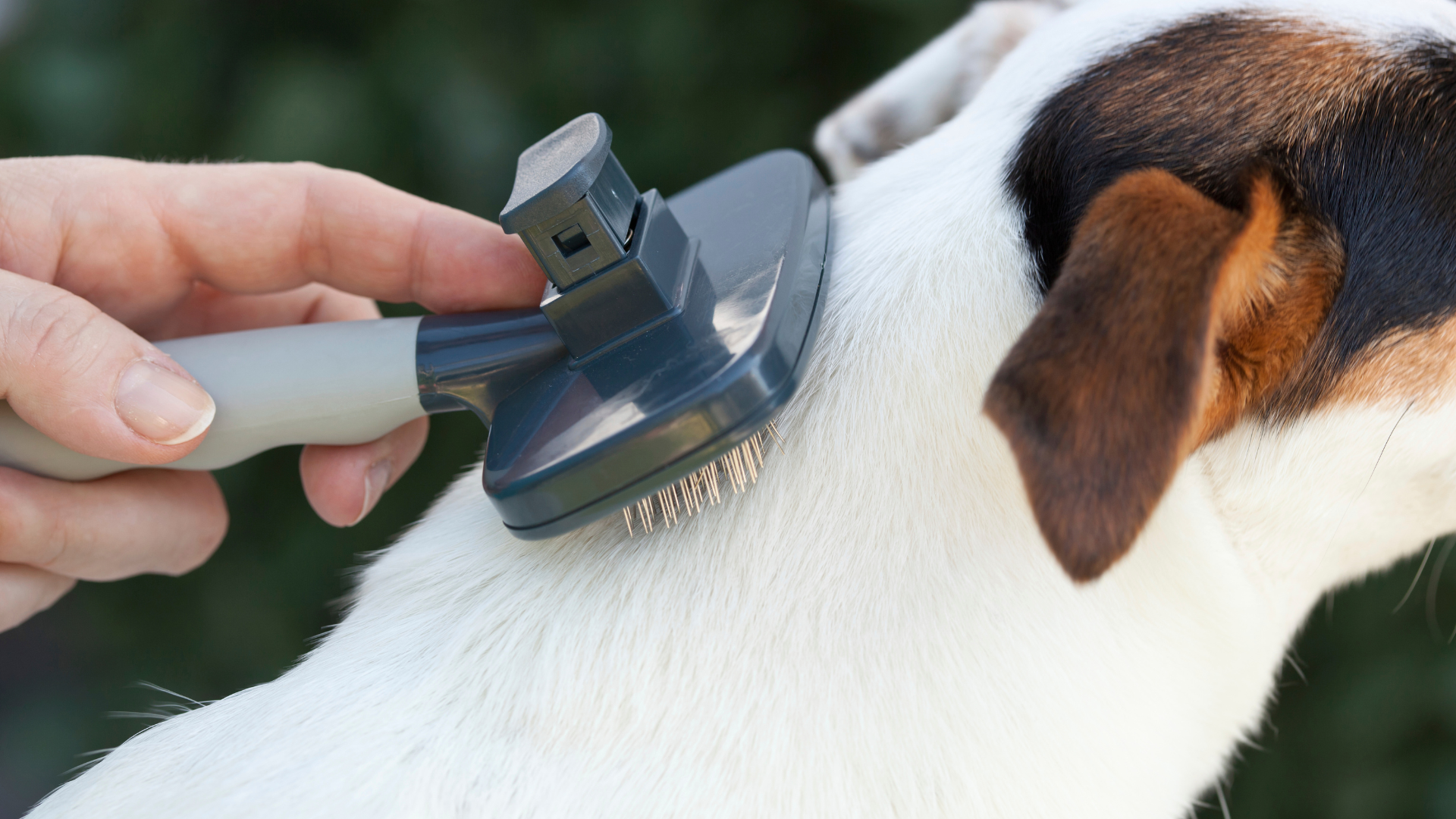
Dog Grooming Tools and Equipment introduces the equipment used across different grooming tasks. Learners examine the purpose of brushes, combs, clippers, scissors, bathing equipment, nail-care tools, drying equipment, and other grooming accessories. Understanding what equipment is designed to do helps learners make more appropriate choices and use tools more effectively.
The course then explores Canine Skin and Coat Care, focusing on the relationship between grooming and overall coat condition. Learners develop awareness of different coat characteristics, common grooming concerns, matting, dryness, irritation, shedding, and other visible changes. Importantly, grooming should not be used as a substitute for veterinary diagnosis, so learners also develop an understanding of when unusual skin or coat conditions should be referred to an appropriate professional.
The fifth module, Breed-Specific Grooming, examines how grooming requirements can differ significantly between breeds and coat types. A short-coated dog, a double-coated breed, a long-haired dog, and a curly or wool-type coat may require very different grooming routines. Learners explore how breed characteristics influence brushing, bathing, trimming, styling, maintenance frequency, and equipment selection.
Finally, The Business of Dog Grooming introduces the professional and commercial side of grooming. Learners explore service planning, client communication, appointment management, pricing considerations, professional presentation, hygiene standards, customer expectations, and the foundations of building a sustainable grooming service.
You’ll discover how to use Practical Dog Grooming Techniques for:
-
Establishing safe and organised grooming routines.
-
Preparing dogs for grooming sessions.
-
Understanding basic canine handling during grooming.
-
Selecting suitable grooming tools and equipment.
-
Brushing and maintaining different coat types.
-
Managing loose hair and routine shedding.
-
Supporting coat cleanliness and presentation.
-
Understanding bathing and drying considerations.
-
Recognising and managing common grooming challenges.
-
Developing more advanced grooming and styling techniques.
-
Adapting grooming practices to different breeds.
-
Recognising visible skin and coat changes.
-
Identifying situations that may require veterinary attention.
-
Maintaining appropriate grooming hygiene.
-
Creating a comfortable and professional grooming environment.
-
Communicating effectively with dog owners about grooming requirements.
-
Developing professional dog grooming services.
-
Exploring the foundations of a dog grooming business.
A strong emphasis throughout the course is placed on safe and responsible practice. Dogs vary considerably in temperament, age, size, coat condition, physical ability, and tolerance for grooming. A technique that works well for one dog may not be suitable for another. Learners therefore develop the habit of assessing the individual dog before selecting equipment or beginning a particular grooming procedure.
Professional grooming begins with preparation. A suitable workspace should be clean, organised, appropriately equipped, and free from unnecessary hazards. Equipment should be maintained in good condition and cleaned appropriately between uses. The grooming environment should also minimise unnecessary stress, excessive noise, and abrupt handling.
Tool selection is another important element. Brushes and combs are not interchangeable, and different coat structures may require different approaches. Clippers and scissors also require careful handling and appropriate technique. Learners develop an understanding of why tools should be selected according to the task, coat type, and condition of the dog rather than simply choosing the most powerful or complex equipment.
The course also addresses common grooming mistakes. These can include rushing through a session, using unsuitable equipment, neglecting preparation, pulling aggressively through tangled hair, failing to monitor a dog’s behaviour, overlooking hygiene, or attempting to groom through a condition that may require professional assessment. Recognising these issues can help learners develop safer and more consistent routines.
Canine skin and coat care is approached from both a grooming and observation perspective. A healthy-looking coat can vary considerably between breeds, but changes such as persistent redness, unusual odour, excessive scratching, sores, significant hair loss, swelling, or other concerning abnormalities should not simply be treated as grooming problems. Responsible groomers know when to stop, document relevant observations, and recommend veterinary assessment where appropriate.
Breed-specific grooming is particularly valuable because there is no single grooming routine suitable for every dog. Coat density, texture, growth patterns, shedding behaviour, breed characteristics, lifestyle, and the owner’s preferred maintenance routine can all influence grooming requirements. Learners develop the ability to think about grooming as an individualised service rather than a one-size-fits-all process.
The course encourages a systematic professional workflow. A grooming appointment may begin with consultation and assessment, followed by preparation, brushing or coat preparation, bathing where appropriate, drying, trimming or styling, finishing, inspection, and clean-up. Maintaining a consistent process can help reduce omissions and provide a more predictable experience for both the dog and the owner.
Real-world scenarios help learners connect theory with practical situations. For example, a groomer may encounter a dog with significant matting, a nervous dog that reacts strongly to equipment, a breed with a high-maintenance coat, or a client requesting a style that may not be suitable for the dog’s coat condition. These situations require communication, judgement, patience, and an understanding of safe grooming boundaries.
The professional side of grooming is equally important. Successful groomers need more than technical ability. They also need to understand customer service, appointment organisation, service descriptions, pricing, time management, cleanliness, record keeping, client expectations, and professional communication. A well-managed grooming experience can encourage trust and repeat business.
Responsible practice should remain central to every grooming decision. Groomers should prioritise animal welfare and avoid procedures that cause unnecessary distress or discomfort. Where a dog’s condition, behaviour, or health creates a concern beyond the groomer’s appropriate role, referral to a veterinary professional is an important part of responsible practice.
Hands-on learning is encouraged throughout the course. Learners can reinforce their knowledge by observing coat types, practising equipment identification, developing grooming sequences, studying breed-specific requirements, and gradually improving their handling and styling techniques under appropriate supervision where practical work is involved.
Continuous improvement is also essential in dog grooming. Techniques, equipment, customer expectations, and professional practices can develop over time. Learners are encouraged to keep refining their skills, reviewing their results, maintaining equipment, learning from each grooming session, and staying aware of responsible animal-care practices.
By the end of Practical Dog Grooming Techniques, learners will have developed a strong foundation in canine grooming, from preparation and equipment selection through coat care, advanced techniques, breed-specific grooming, and professional service management. The course provides practical knowledge that can support responsible home grooming while also creating a foundation for further development towards professional dog grooming.
3. Course Modules
Module 1: Introduction to Dog Grooming
-
Understanding the purpose and importance of dog grooming
-
Preparing a safe and suitable grooming environment
-
Understanding basic canine handling principles
-
Establishing a structured grooming routine
-
Introducing dogs to grooming equipment
-
Supporting calm and positive grooming experiences
-
Maintaining cleanliness and hygiene
-
Recognising when grooming concerns require professional advice
Module 2: Advanced Grooming Techniques and Styles
-
Understanding advanced grooming principles
-
Preparing coats for detailed grooming
-
Developing trimming and styling techniques
-
Working with different coat textures
-
Creating neat and balanced finishes
-
Adapting techniques to individual dogs
-
Managing grooming challenges safely
-
Maintaining quality and consistency in grooming results
Module 3: Dog Grooming Tools and Equipment
-
Identifying essential dog grooming tools
-
Understanding brushes and combs
-
Exploring clippers and grooming blades
-
Understanding scissors and finishing tools
-
Selecting equipment for different coat types
-
Using bathing and drying equipment appropriately
-
Cleaning and maintaining grooming equipment
-
Organising a practical grooming workstation
Module 4: Canine Skin and Coat Care
-
Understanding canine skin and coat characteristics
-
Recognising different coat types
-
Supporting healthy coat maintenance
-
Managing loose hair and shedding
-
Understanding matting and tangling
-
Identifying visible skin and coat abnormalities
-
Maintaining appropriate bathing and coat-care routines
-
Recognising when veterinary advice may be required
Module 5: Breed-Specific Grooming
-
Understanding breed-related grooming requirements
-
Identifying differences between major coat types
-
Adapting brushing techniques to individual breeds
-
Understanding breed-specific trimming considerations
-
Selecting suitable tools for different breeds
-
Managing high-maintenance and long coats
-
Considering lifestyle and individual grooming needs
-
Creating appropriate breed-specific grooming routines
Module 6: The Business of Dog Grooming
-
Understanding the foundations of a dog grooming business
-
Developing grooming services and packages
-
Managing client consultations and expectations
-
Organising appointments and schedules
-
Considering pricing and service costs
-
Maintaining professional hygiene and presentation
-
Building strong customer relationships
-
Developing sustainable professional grooming practices
Course Content
Module-1_-Introduction-to-Dog-Grooming
-
Lesson-1_-Introduction-to-Dog-Grooming
Module-2_-Advanced-Grooming-Techniques-and-Styles
Module-3_-Dog-Grooming-Tools-and-Equipment
Module-4_-Canine-Skin-and-Coat-Care
Module-5_-Breed-Specific-Grooming
Module-6_-The-Business-of-Dog-Grooming
Student Ratings & Reviews